
The journal
Packing cube vs compression packing cube: the difference
Standard cubes organise belongings; compression models also reduce bulk. Compare access, closure design and garment needs, then weigh and measure the filled bag.
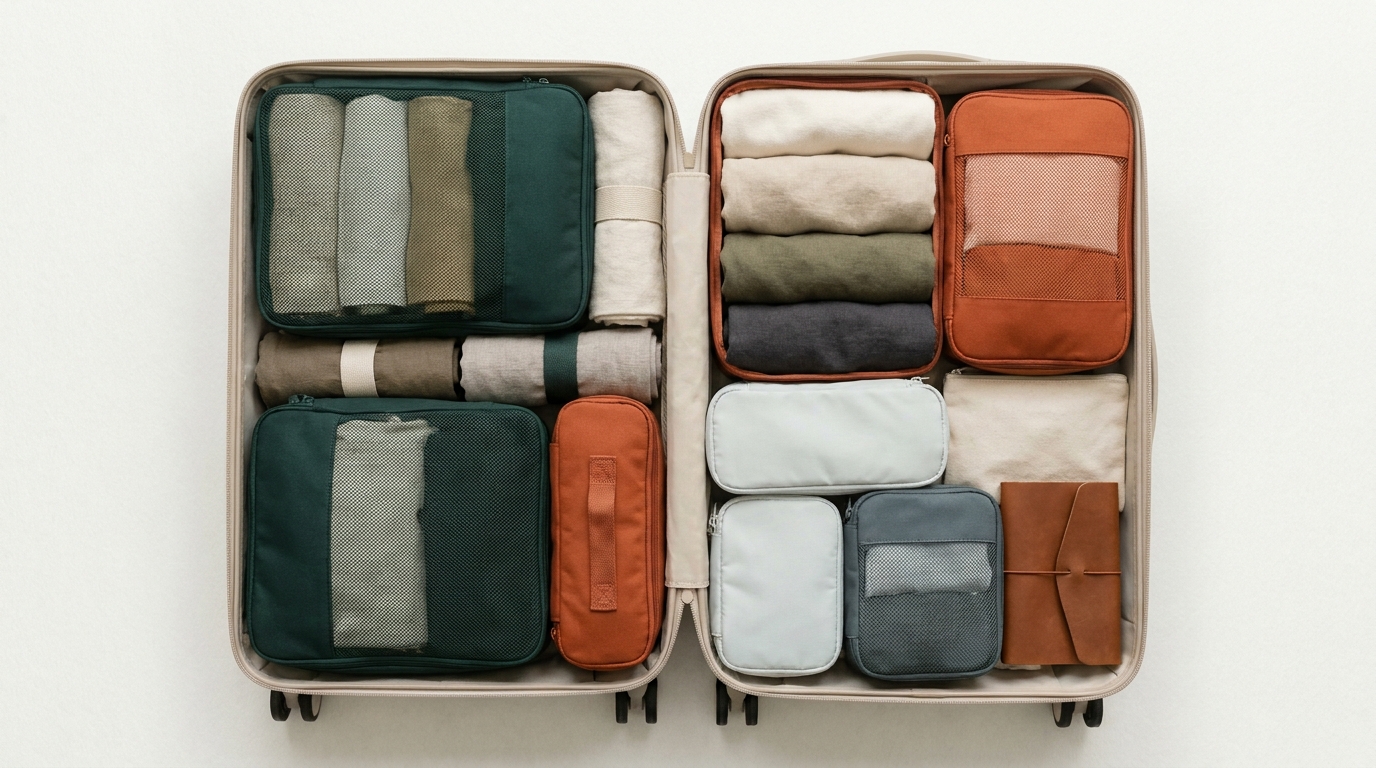
A packing cube is for organizing your bag; a compression packing cube does the same but in a common zip-around design has a second zipper that compresses the filled cube to reduce the volume your clothes take up. Compression changes space, not weight, so your bag can still be heavy even if it looks slimmer (Travelpro: packing cubes vs compression cubes; Eagle Creek FAQ: packing vs compression cubes).
How they differ at a glance
- Closure: A simple standard cube has a main closure. Many compression models add a second compression zipper around the edge to tighten the packed cube (Travelpro; Eagle Creek).
- Main purpose: Standard cubes prioritize sorting and quick access; compression cubes both organize and condense soft clothing to free up space (Travelpro).
- Impact on limits: Compression reduces bulk but not mass; airline weight and size rules still apply (Travelpro).
When to choose each
Pick standard packing cubes when:
- You want tidy sections for outfits, days or people, especially on short city breaks, business trips or family suitcases.
- You will repack often on multi-stop trips and value quick access without compressing everything (Travelpro).
- Your clothes crease easily and you prefer a looser fold.
Choose compression cubes when:
- You need to shrink the volume of soft, bulky layers like jumpers and trousers to fit a smaller cabin bag.
- You want to keep more in hand luggage rather than checking a larger suitcase.
- You’re packing flexible garments that won’t suffer from firmer compression (Travelpro).
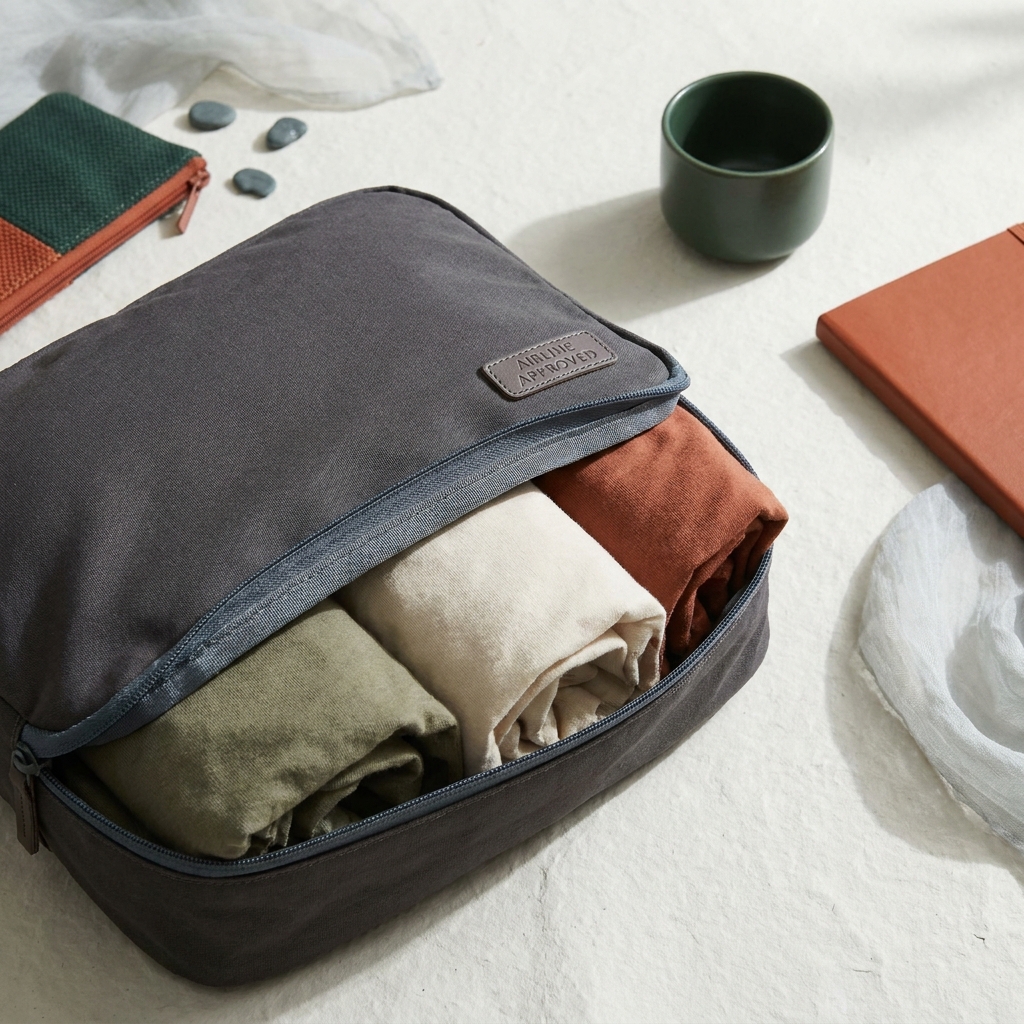
What to pack in each type
Best in compression cubes
- Jumpers, sweatshirts
- T-shirts
- Jeans and trousers
- Pyjamas
- Casual dresses and lightweight layers
Avoid rigid items (shoes, electronics, toiletries) and be cautious with easily creased garments; these often fare better in a standard cube without added pressure (Travelpro).
Best in standard cubes
- Outfits you’ll reach for first at the destination
- Dress shirts or items prone to creasing
- Accessories and smaller categories you want to keep together
How a compression packing cube works (and the right way to use it)
- Start expanded: Open the main compartment fully following the maker’s opening and closure sequence.
- Fold or roll evenly: Distribute items flat and edge to edge rather than mounding a single pile.
- Close the main zip first: Seal the regular zipper to contain the load.
- Compress gradually: Run the compression zipper around the perimeter, smoothing fabric as you go. If you must fight the zip, remove an item and try again.
- Leave some give: Over-compressing can add wrinkles and make repacking harder on multi-stop trips (Travelpro).
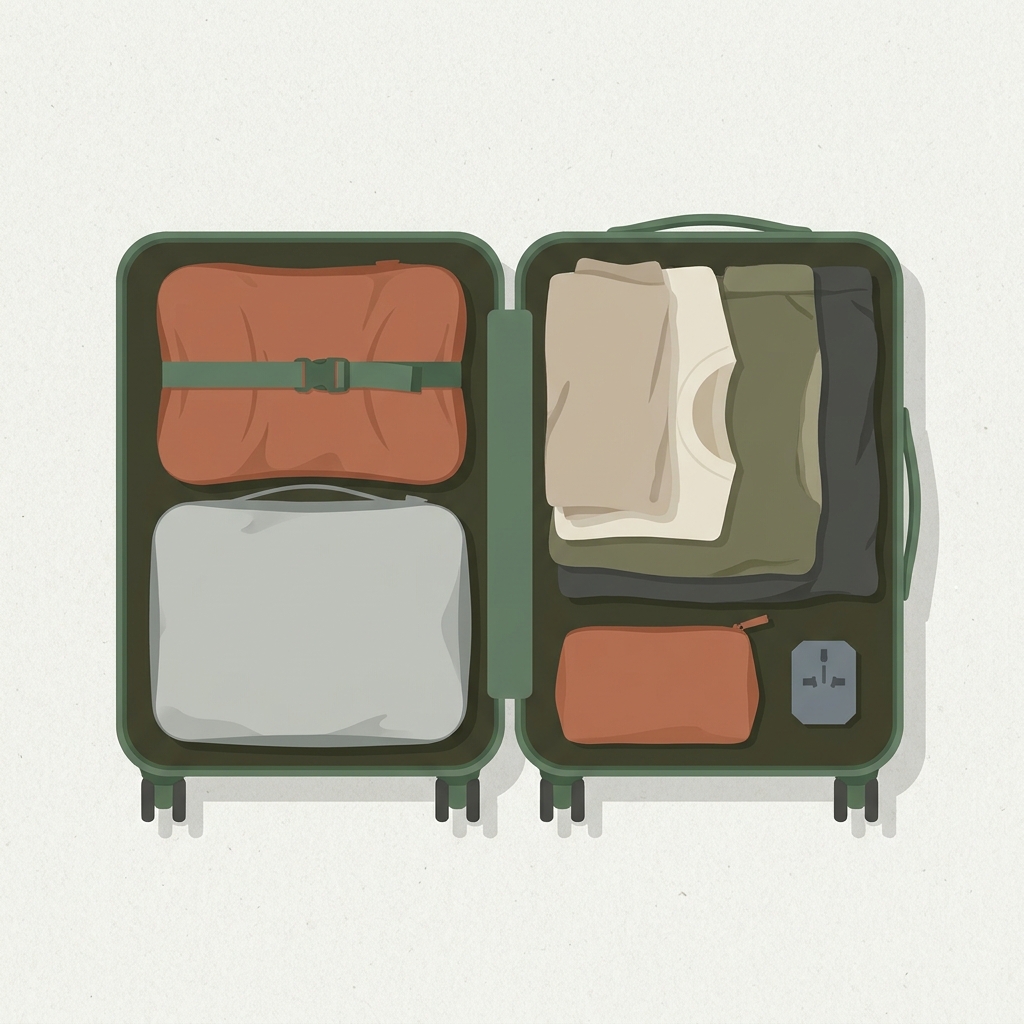
A simple way to combine both
Use a mixed setup to keep access easy and bulk down: a small standard cube for underwear and socks, a medium standard cube for tops you’ll wear first, and a medium compression cube for jumpers and trousers. This creates zones inside your bag without squeezing everything (Travelpro).
Put this into practice
Compare both cube types with the same clothing and final bag. Check whether the packed shape remains usable and the total load is allowed, rather than judging only the cube before it is filled.
Quick checklist: choose and use the right cube
Related reading from Cabin & Carry
- How does a compression packing cube work? Practical steps and smart use
- How many packing cubes do you need for a carry-on?
FAQ
Do compression cubes save space in every situation?
They reduce the volume of soft clothing, but the most efficient setup mixes standard cubes for access with compression cubes for bulkier layers (Travelpro).
Will compression help me meet airline limits?
It can help fit clothing into a smaller bag, but airline size and weight limits still apply; compression does not reduce weight (Travelpro).
What’s the defining feature of a compression cube?
In the zip-around examples discussed here, an extra compression zipper tightens the filled cube. Other compression designs can use different closures (Eagle Creek).
From Cabin & Carry: choose the cube that solves your real packing problem, and you’ll feel the difference every time you zip your bag.

Optional equipment for this guide
Compare an ordinary cube with a compression design using the same clothing. Check the exact external dimensions and loaded weight; less volume is not less mass.
As an Amazon Associate I earn from qualifying purchases. These are researched options, not hands-on test results. Check the exact size or model, current price and availability on Amazon.
| Product option | Fit and limits to check | Retailer |
|---|---|---|
| Product imageEagle Creek Pack-It Reveal, medium cube | A packing-cube option for separating clothing inside a bag. Compare the cube’s dimensions with usable bag space; it does not increase baggage allowance. | View on Amazon |
| Product imagePeak Design Packing Cube, medium Charcoal | A compression-cube candidate for dividing clean and used clothing. Check the exact size and packed weight; compression saves space, not mass. | View on Amazon |