
The journal
How to wash out travel bottles (and keep your toiletry bag clean)
Clean refillable toiletry bottles using their own material and part instructions, with real examples showing why caps, silicone tubes and fabric bottles need different care.
Empty the bottle, remove only the parts designed to come off, and use the cleaning method specified for that container. For many refillable toiletry bottles this means warm water and gentle hand washing, followed by thorough rinsing and drying before storage. Do not assume the bottle body, collar and cap can all go in a dishwasher.
Check the actual bottle and each part
Humangear’s GoToob+ instructions make a useful distinction: its tubes and collars can go on the top dishwasher rack, but the flip caps are hand-washed in warm, soapy water. That is guidance for those parts of that product, not permission to dishwash every silicone travel bottle.
Matador’s FlatPak instructions specify hand washing only: fill with warm water and massage the outside to clean the bottle. The maker rules out both a dishwasher and a washing machine. A coated fabric pouch should not automatically be scrubbed internally with the same brush you use in a rigid bottle.
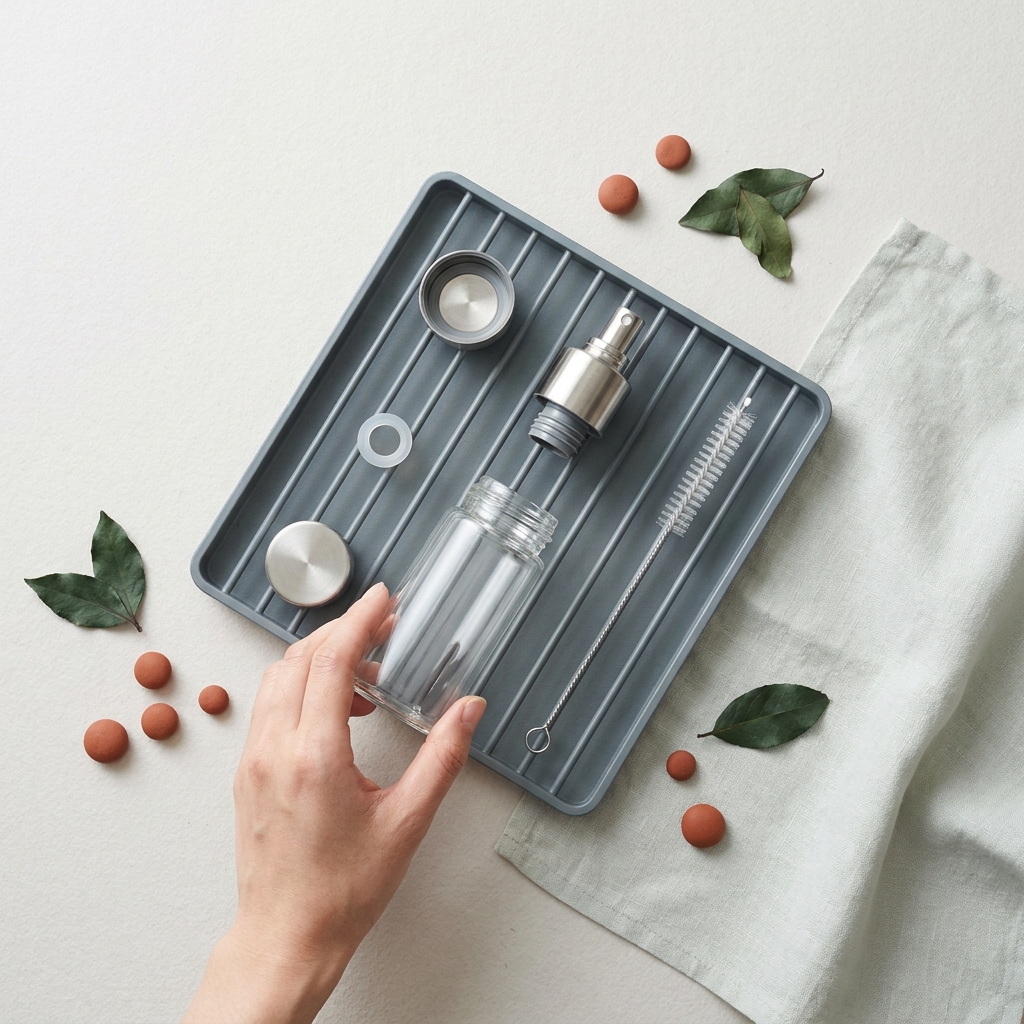
Work through a normal clean
- Check the maker’s care instructions and compatible contents before choosing soap, a brush or a soaking method.
- Empty residue and remove the cap or other user-removable parts. Do not pull out a fixed valve or seal just to make the bottle look fully disassembled.
- Wash using the approved water temperature, cleaning product and method. Reach cap threads and removable seals gently where the design permits.
- Rinse until the cleaning product and old contents are removed. Check closures and dispensing openings without forcing them.
- Dry and store according to the instructions. For empty storage, leave washed parts open to dry before closing them away.
Routine washing does not establish sterility. Use only cleaning methods approved for the bottle; incompatible heat or chemicals can damage the body or closure.
Deal with residue without damaging the bottle
If a normal approved wash leaves a film or odour, check the maker’s troubleshooting advice before trying a stronger chemical or hotter water. Replace a damaged container or one you cannot clean appropriately, rather than hiding residue under a new refill.
Compatibility also concerns what you put back inside. Matador lists ethanol as a known problem for its FlatPak material. Other containers have different restrictions, so check the actual cosmetic product and bottle guidance rather than assuming every shampoo, sunscreen or alcohol-containing product suits every refillable container.
Refill and repack deliberately
Use a clear contents label, keep cap components with the correct bottle and check that the closure is fully engaged. Follow any product-specific leak-check instructions over a sink before packing. Do not dilute a cosmetic to make it flow more easily unless its own instructions allow that; decanting does not extend the product’s expiry or period-after-opening guidance.
Keep toiletry-only bottles for toiletries. If a leak has reached the bag, clean it using the bag’s permitted washing method before replacing the bottles. Plan the next cleaning around the actual contents, residue and storage instructions rather than a compulsory every-few-days schedule for every product.
Clean refillable toiletry bottles by their instructions

Related guides
Optional equipment for this guide
Keep sound bottles that can be cleaned as instructed. If you need replacements, match the material and closure to the contents and the trip’s security rules.
As an Amazon Associate I earn from qualifying purchases. These are researched options, not hands-on test results. Check the exact size or model, current price and availability on Amazon.
| Product option | Fit and limits to check | Retailer |
|---|---|---|
| Product imagehumangear GoToob+ medium 2.5 fl oz bottles, 3-pack | Medium 2.5 fl oz GoToob+ bottles for compatible toiletries. Check humangear’s compatibility list, test overnight before travel, and never use them for contact-lens solution or liquid prescription medicine. Airport acceptance still depends on the applicable rules. | View on Amazon |